26.03.2026

26.03.2026

article

article

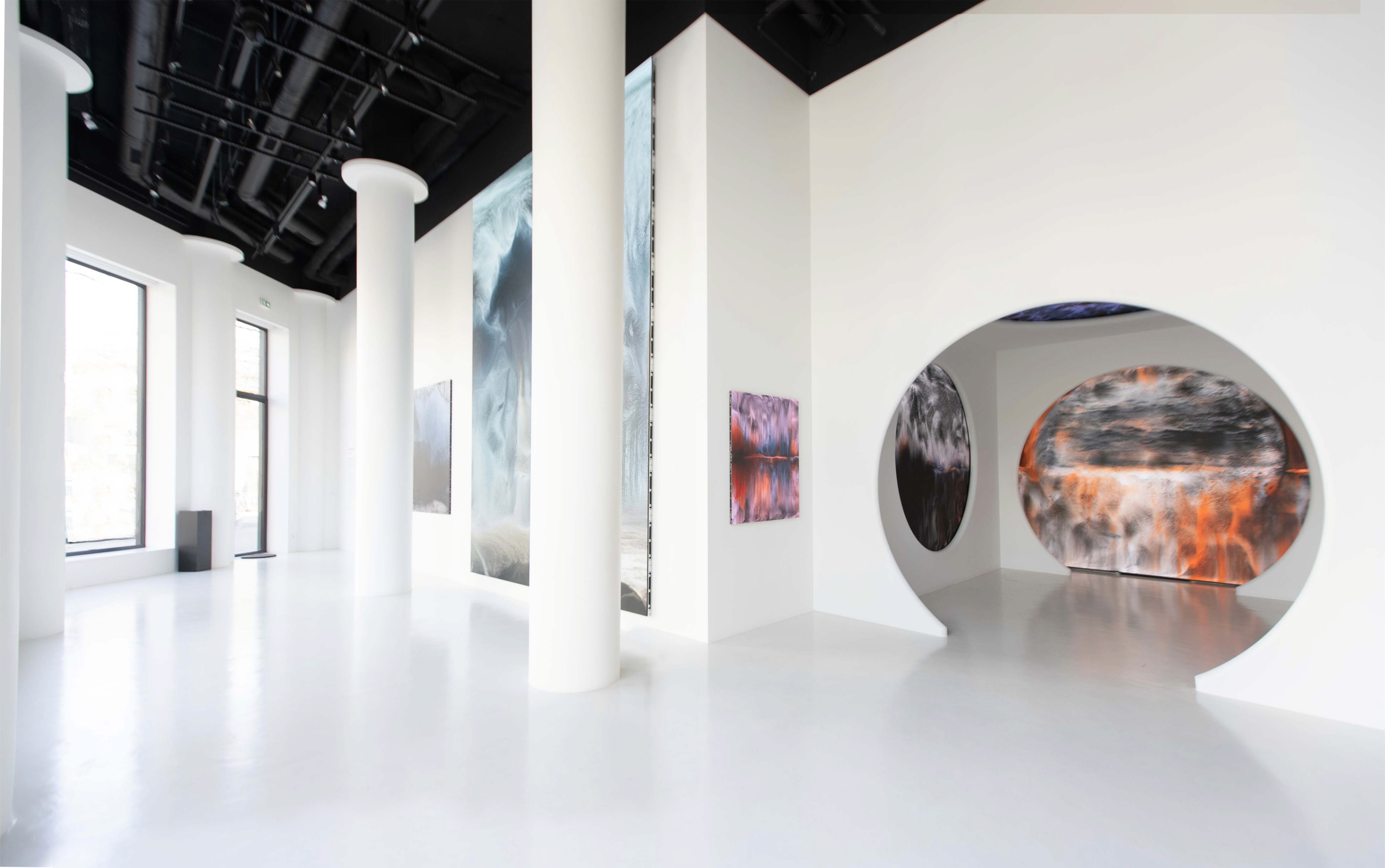
Desilence: presenting Paramnésico on and off screen

On the occasion of their solo exhibition at Load gallery, we spoke with Barcelona-based artist duo Desilence.

Installation view: “Paramnésico” by Desilence.
Courtesy Load gallery

Desilence, founded in 2005 by Tatiana Halbach and Søren Christensen, emerged from a long-standing shared interest in moving image, real-time visuals, and the possibility of treating video as a painterly medium. They first met in Barcelona more than twenty years ago, when Tatiana introduced Søren to video jockeying — an experience he describes as a revelation, opening a new world of real-time image-making. From there, they began experimenting together, first through live visuals and events, later expanding into increasingly ambitious projects.


Tatiana comes from a background in painting and philosophy. While studying at art school, she became interested in video through a class on contemporary image processes and began searching for ways to “paint with video.” At the time, analogue tools made this difficult, but the idea remained central to her practice. Søren, by contrast, came from video editing, visual journalism, and later multimedia and interaction design. He was initially drawn to the glitches and imperfections of analogue video, and then to the creative possibilities opened by Flash, motion graphics, and real-time systems. Their collaboration grew out of these complementary trajectories: Tatiana’s painterly sensibility and Søren’s interest in technical systems and visual structure.


Their practice has always aimed to move visuals beyond the screen. This impulse eventually led them into theatre and visual scenography, a field they began exploring around fifteen years ago, when the idea of creating an entire scenography through video still seemed radical. What mattered to them was the transformation of moving image into spatial and atmospheric experience. 

Visual scenography can be understood as the use of light, moving image, and visual composition as a primary scenographic material. Rather than functioning as a backdrop or illustration, the image becomes an active spatial layer that shapes perception, rhythm, and atmosphere, interacting with performers, sound, and architecture to construct a living environment on stage.
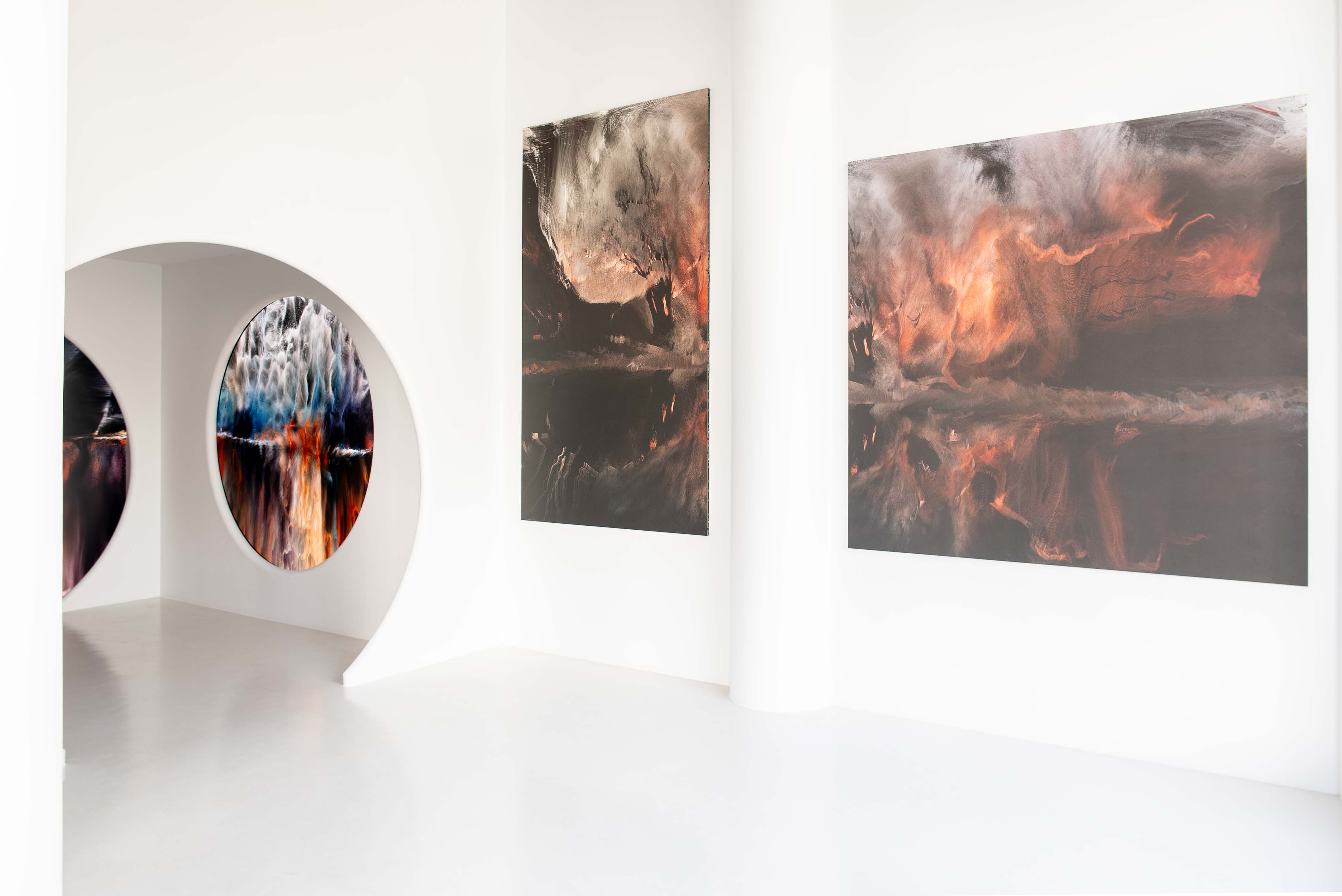

Installation view: “Paramnésico” by Desilence. Courtesy Load gallery


Paramnésico originates in the concept of paramnesia — the inability to distinguish between dreams and reality. The first immersive iteration was developed around three years ago, following several months during which the artists recorded their dreams. As AI was gaining traction at the time, they incorporated it as one tool among others to translate these images into visual form and bring them into motion.


The gallery version shown at Load differs significantly from the immersive one, although both share the same conceptual core. The immersive piece moved quickly and intensely, almost like being inside a paranoid stream of images, while the exhibition version isolates individual dream moments and expands them. Each work begins from a fragment, an image remembered from a dream, and develops into what the artists describe as a living painting.


Dreams, in this sense, are not treated as narratives but as concentrated visual residues. Both artists perceive dreaming as a way of confronting or understanding daily life, and they note that their environment strongly shapes the imagery that appears in their dreams. Living in the forest has made nature central to Paramnésico: trees, landscapes, changing light, and seasonal sensations recur because they are part of the artists’s lived reality. Earlier, when they lived in the city, their dream imagery was more urban. The exhibition thus emerges from reality, but reinterprets it through the subconscious, where the everyday is displaced, recomposed, and made strange. 
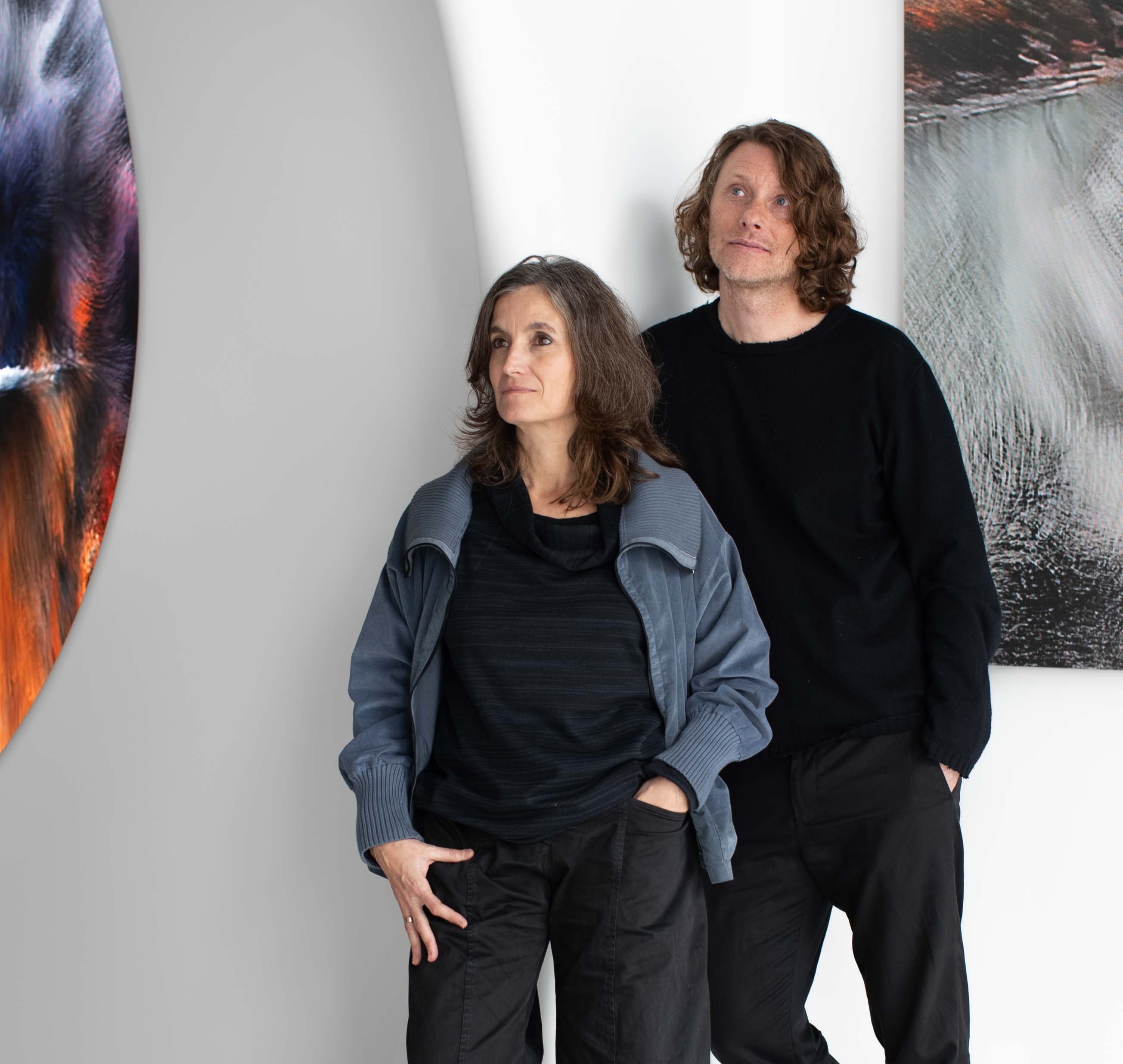
Desilence (Tatiana Halbach and Søren Christensen)

“The selection of works in Paramnésico was intuitive, yet the titles reveal an underlying alignment. From roots that no longer anchor (Suspended Roots, Echoes of Roots), to accumulated layers (Urban Strata), to moments of interruption (Threshold) and loss of ground (Unravel), the exhibition traces a subtle displacement.

All works suggest a shift in position. What was stable becomes unstable and begins to loosen. Through this movement, something is cleared — not as rupture, but as a quiet reordering.

The dreams remain specific, but what emerges across the exhibition is a shared direction: a gradual reconfiguration of what sustains, where roots are no longer fixed, but redefined. Out of this process, a more singular presence begins to take form — not imposed, but revealed.”

Desilence


A central challenge in Paramnésico was tempo. The artists wanted the pieces to retain the rich textures generated through fast motion, alike paint splashes, but without appearing frantic. Their solution was to render material at very high frame rates and then slow it down, producing images that move almost imperceptibly. This creates a temporal condition closer to recalling a dream: the image appears nearly static, yet each time the viewer looks back, it has changed. The loops were also extended so that they would read as continuous, hovering states. 


Sound was approached in a similarly atmospheric way. Rather than building conventional musical accompaniment, the artists imagined dream-like soundscapes — breathing, echoes, slow textures — and worked with a musician friend, DJ 2d2, to shape these into a final composition. Even so, they note that the works can function with or without sound. What matters most is not the soundtrack itself, but the possibility for the viewer to become absorbed, to get lost in the work in a hypnotic way.


Throughout the interview, Tatiana repeatedly returned to painting as the underlying thread running through the whole practice. The shift to digital did not replace that impulse, but extended it. What digital moving image now offers, she suggests, is the ability to work with not one chosen frame, but thousands. That, for her, is one of the great freedoms of the medium. And it’s fun, too. 

Desilence, founded in 2005 by Tatiana Halbach and Søren Christensen, emerged from a long-standing shared interest in moving image, real-time visuals, and the possibility of treating video as a painterly medium. They first met in Barcelona more than twenty years ago, when Tatiana introduced Søren to video jockeying — an experience he describes as a revelation, opening a new world of real-time image-making. From there, they began experimenting together, first through live visuals and events, later expanding into increasingly ambitious projects.


Tatiana comes from a background in painting and philosophy. While studying at art school, she became interested in video through a class on contemporary image processes and began searching for ways to “paint with video.” At the time, analogue tools made this difficult, but the idea remained central to her practice. Søren, by contrast, came from video editing, visual journalism, and later multimedia and interaction design. He was initially drawn to the glitches and imperfections of analogue video, and then to the creative possibilities opened by Flash, motion graphics, and real-time systems. Their collaboration grew out of these complementary trajectories: Tatiana’s painterly sensibility and Søren’s interest in technical systems and visual structure.


Their practice has always aimed to move visuals beyond the screen. This impulse eventually led them into theatre and visual scenography, a field they began exploring around fifteen years ago, when the idea of creating an entire scenography through video still seemed radical. What mattered to them was the transformation of moving image into spatial and atmospheric experience. 

Visual scenography can be understood as the use of light, moving image, and visual composition as a primary scenographic material. Rather than functioning as a backdrop or illustration, the image becomes an active spatial layer that shapes perception, rhythm, and atmosphere, interacting with performers, sound, and architecture to construct a living environment on stage.


Installation view: “Paramnésico” by Desilence. Courtesy Load gallery


Paramnésico originates in the concept of paramnesia — the inability to distinguish between dreams and reality. The first immersive iteration was developed around three years ago, following several months during which the artists recorded their dreams. As AI was gaining traction at the time, they incorporated it as one tool among others to translate these images into visual form and bring them into motion.


The gallery version shown at Load differs significantly from the immersive one, although both share the same conceptual core. The immersive piece moved quickly and intensely, almost like being inside a paranoid stream of images, while the exhibition version isolates individual dream moments and expands them. Each work begins from a fragment, an image remembered from a dream, and develops into what the artists describe as a living painting.


Dreams, in this sense, are not treated as narratives but as concentrated visual residues. Both artists perceive dreaming as a way of confronting or understanding daily life, and they note that their environment strongly shapes the imagery that appears in their dreams. Living in the forest has made nature central to Paramnésico: trees, landscapes, changing light, and seasonal sensations recur because they are part of the artists’s lived reality. Earlier, when they lived in the city, their dream imagery was more urban. The exhibition thus emerges from reality, but reinterprets it through the subconscious, where the everyday is displaced, recomposed, and made strange. 

Desilence (Tatiana Halbach and Søren Christensen)

“The selection of works in Paramnésico was intuitive, yet the titles reveal an underlying alignment. From roots that no longer anchor (Suspended Roots, Echoes of Roots), to accumulated layers (Urban Strata), to moments of interruption (Threshold) and loss of ground (Unravel), the exhibition traces a subtle displacement.

All works suggest a shift in position. What was stable becomes unstable and begins to loosen. Through this movement, something is cleared — not as rupture, but as a quiet reordering.

The dreams remain specific, but what emerges across the exhibition is a shared direction: a gradual reconfiguration of what sustains, where roots are no longer fixed, but redefined. Out of this process, a more singular presence begins to take form — not imposed, but revealed.”

Desilence


A central challenge in Paramnésico was tempo. The artists wanted the pieces to retain the rich textures generated through fast motion, alike paint splashes, but without appearing frantic. Their solution was to render material at very high frame rates and then slow it down, producing images that move almost imperceptibly. This creates a temporal condition closer to recalling a dream: the image appears nearly static, yet each time the viewer looks back, it has changed. The loops were also extended so that they would read as continuous, hovering states. 


Sound was approached in a similarly atmospheric way. Rather than building conventional musical accompaniment, the artists imagined dream-like soundscapes — breathing, echoes, slow textures — and worked with a musician friend, DJ 2d2, to shape these into a final composition. Even so, they note that the works can function with or without sound. What matters most is not the soundtrack itself, but the possibility for the viewer to become absorbed, to get lost in the work in a hypnotic way.


Throughout the interview, Tatiana repeatedly returned to painting as the underlying thread running through the whole practice. The shift to digital did not replace that impulse, but extended it. What digital moving image now offers, she suggests, is the ability to work with not one chosen frame, but thousands. That, for her, is one of the great freedoms of the medium. And it’s fun, too. 

Desilence, founded in 2005 by Tatiana Halbach and Søren Christensen, emerged from a long-standing shared interest in moving image, real-time visuals, and the possibility of treating video as a painterly medium. They first met in Barcelona more than twenty years ago, when Tatiana introduced Søren to video jockeying — an experience he describes as a revelation, opening a new world of real-time image-making. From there, they began experimenting together, first through live visuals and events, later expanding into increasingly ambitious projects.


Tatiana comes from a background in painting and philosophy. While studying at art school, she became interested in video through a class on contemporary image processes and began searching for ways to “paint with video.” At the time, analogue tools made this difficult, but the idea remained central to her practice. Søren, by contrast, came from video editing, visual journalism, and later multimedia and interaction design. He was initially drawn to the glitches and imperfections of analogue video, and then to the creative possibilities opened by Flash, motion graphics, and real-time systems. Their collaboration grew out of these complementary trajectories: Tatiana’s painterly sensibility and Søren’s interest in technical systems and visual structure.


Their practice has always aimed to move visuals beyond the screen. This impulse eventually led them into theatre and visual scenography, a field they began exploring around fifteen years ago, when the idea of creating an entire scenography through video still seemed radical. What mattered to them was the transformation of moving image into spatial and atmospheric experience. 

Visual scenography can be understood as the use of light, moving image, and visual composition as a primary scenographic material. Rather than functioning as a backdrop or illustration, the image becomes an active spatial layer that shapes perception, rhythm, and atmosphere, interacting with performers, sound, and architecture to construct a living environment on stage.


Installation view: “Paramnésico” by Desilence. Courtesy Load gallery


Paramnésico originates in the concept of paramnesia — the inability to distinguish between dreams and reality. The first immersive iteration was developed around three years ago, following several months during which the artists recorded their dreams. As AI was gaining traction at the time, they incorporated it as one tool among others to translate these images into visual form and bring them into motion.


The gallery version shown at Load differs significantly from the immersive one, although both share the same conceptual core. The immersive piece moved quickly and intensely, almost like being inside a paranoid stream of images, while the exhibition version isolates individual dream moments and expands them. Each work begins from a fragment, an image remembered from a dream, and develops into what the artists describe as a living painting.


Dreams, in this sense, are not treated as narratives but as concentrated visual residues. Both artists perceive dreaming as a way of confronting or understanding daily life, and they note that their environment strongly shapes the imagery that appears in their dreams. Living in the forest has made nature central to Paramnésico: trees, landscapes, changing light, and seasonal sensations recur because they are part of the artists’s lived reality. Earlier, when they lived in the city, their dream imagery was more urban. The exhibition thus emerges from reality, but reinterprets it through the subconscious, where the everyday is displaced, recomposed, and made strange. 

Desilence (Tatiana Halbach and Søren Christensen)

“The selection of works in Paramnésico was intuitive, yet the titles reveal an underlying alignment. From roots that no longer anchor (Suspended Roots, Echoes of Roots), to accumulated layers (Urban Strata), to moments of interruption (Threshold) and loss of ground (Unravel), the exhibition traces a subtle displacement.

All works suggest a shift in position. What was stable becomes unstable and begins to loosen. Through this movement, something is cleared — not as rupture, but as a quiet reordering.

The dreams remain specific, but what emerges across the exhibition is a shared direction: a gradual reconfiguration of what sustains, where roots are no longer fixed, but redefined. Out of this process, a more singular presence begins to take form — not imposed, but revealed.”

Desilence


A central challenge in Paramnésico was tempo. The artists wanted the pieces to retain the rich textures generated through fast motion, alike paint splashes, but without appearing frantic. Their solution was to render material at very high frame rates and then slow it down, producing images that move almost imperceptibly. This creates a temporal condition closer to recalling a dream: the image appears nearly static, yet each time the viewer looks back, it has changed. The loops were also extended so that they would read as continuous, hovering states. 


Sound was approached in a similarly atmospheric way. Rather than building conventional musical accompaniment, the artists imagined dream-like soundscapes — breathing, echoes, slow textures — and worked with a musician friend, DJ 2d2, to shape these into a final composition. Even so, they note that the works can function with or without sound. What matters most is not the soundtrack itself, but the possibility for the viewer to become absorbed, to get lost in the work in a hypnotic way.


Throughout the interview, Tatiana repeatedly returned to painting as the underlying thread running through the whole practice. The shift to digital did not replace that impulse, but extended it. What digital moving image now offers, she suggests, is the ability to work with not one chosen frame, but thousands. That, for her, is one of the great freedoms of the medium. And it’s fun, too. 

Desilence, founded in 2005 by Tatiana Halbach and Søren Christensen, emerged from a long-standing shared interest in moving image, real-time visuals, and the possibility of treating video as a painterly medium. They first met in Barcelona more than twenty years ago, when Tatiana introduced Søren to video jockeying — an experience he describes as a revelation, opening a new world of real-time image-making. From there, they began experimenting together, first through live visuals and events, later expanding into increasingly ambitious projects.


Tatiana comes from a background in painting and philosophy. While studying at art school, she became interested in video through a class on contemporary image processes and began searching for ways to “paint with video.” At the time, analogue tools made this difficult, but the idea remained central to her practice. Søren, by contrast, came from video editing, visual journalism, and later multimedia and interaction design. He was initially drawn to the glitches and imperfections of analogue video, and then to the creative possibilities opened by Flash, motion graphics, and real-time systems. Their collaboration grew out of these complementary trajectories: Tatiana’s painterly sensibility and Søren’s interest in technical systems and visual structure.


Their practice has always aimed to move visuals beyond the screen. This impulse eventually led them into theatre and visual scenography, a field they began exploring around fifteen years ago, when the idea of creating an entire scenography through video still seemed radical. What mattered to them was the transformation of moving image into spatial and atmospheric experience. 

Visual scenography can be understood as the use of light, moving image, and visual composition as a primary scenographic material. Rather than functioning as a backdrop or illustration, the image becomes an active spatial layer that shapes perception, rhythm, and atmosphere, interacting with performers, sound, and architecture to construct a living environment on stage.


Installation view: “Paramnésico” by Desilence. Courtesy Load gallery


Paramnésico originates in the concept of paramnesia — the inability to distinguish between dreams and reality. The first immersive iteration was developed around three years ago, following several months during which the artists recorded their dreams. As AI was gaining traction at the time, they incorporated it as one tool among others to translate these images into visual form and bring them into motion.


The gallery version shown at Load differs significantly from the immersive one, although both share the same conceptual core. The immersive piece moved quickly and intensely, almost like being inside a paranoid stream of images, while the exhibition version isolates individual dream moments and expands them. Each work begins from a fragment, an image remembered from a dream, and develops into what the artists describe as a living painting.


Dreams, in this sense, are not treated as narratives but as concentrated visual residues. Both artists perceive dreaming as a way of confronting or understanding daily life, and they note that their environment strongly shapes the imagery that appears in their dreams. Living in the forest has made nature central to Paramnésico: trees, landscapes, changing light, and seasonal sensations recur because they are part of the artists’s lived reality. Earlier, when they lived in the city, their dream imagery was more urban. The exhibition thus emerges from reality, but reinterprets it through the subconscious, where the everyday is displaced, recomposed, and made strange. 

Desilence (Tatiana Halbach and Søren Christensen)

“The selection of works in Paramnésico was intuitive, yet the titles reveal an underlying alignment. From roots that no longer anchor (Suspended Roots, Echoes of Roots), to accumulated layers (Urban Strata), to moments of interruption (Threshold) and loss of ground (Unravel), the exhibition traces a subtle displacement.

All works suggest a shift in position. What was stable becomes unstable and begins to loosen. Through this movement, something is cleared — not as rupture, but as a quiet reordering.

The dreams remain specific, but what emerges across the exhibition is a shared direction: a gradual reconfiguration of what sustains, where roots are no longer fixed, but redefined. Out of this process, a more singular presence begins to take form — not imposed, but revealed.”

Desilence


A central challenge in Paramnésico was tempo. The artists wanted the pieces to retain the rich textures generated through fast motion, alike paint splashes, but without appearing frantic. Their solution was to render material at very high frame rates and then slow it down, producing images that move almost imperceptibly. This creates a temporal condition closer to recalling a dream: the image appears nearly static, yet each time the viewer looks back, it has changed. The loops were also extended so that they would read as continuous, hovering states. 


Sound was approached in a similarly atmospheric way. Rather than building conventional musical accompaniment, the artists imagined dream-like soundscapes — breathing, echoes, slow textures — and worked with a musician friend, DJ 2d2, to shape these into a final composition. Even so, they note that the works can function with or without sound. What matters most is not the soundtrack itself, but the possibility for the viewer to become absorbed, to get lost in the work in a hypnotic way.


Throughout the interview, Tatiana repeatedly returned to painting as the underlying thread running through the whole practice. The shift to digital did not replace that impulse, but extended it. What digital moving image now offers, she suggests, is the ability to work with not one chosen frame, but thousands. That, for her, is one of the great freedoms of the medium. And it’s fun, too. 

Text by Anna Leven

SHARE THIS

ADDRESS

Carrer Llull, 134, 08005 Barcelona, Spain

CONTACT

visit@load-gallery.com

SIGN UP FOR UPDATES
OPENING HOURS

4 PM — 8 PM, Thursday–Saturday

Gallery admission is free

For collectors, artists and potential collaborators visits are available by appointment—please email us to arrange a private viewing

@Load Gallery 2023-2025

ADDRESS

Carrer Llull, 134, 08005 Barcelona, Spain

CONTACT

visit@load-gallery.com

SIGN UP FOR UPDATES
OPENING HOURS

4 PM — 8 PM, Thursday–Saturday

Gallery admission is free

For collectors, artists and potential collaborators visits are available by appointment—please email us to arrange a private viewing

@Load Gallery 2023-2025

ADDRESS

Carrer Llull, 134, 08005 Barcelona, Spain

CONTACT

visit@load-gallery.com

SIGN UP FOR UPDATES

OPENING HOURS

4 PM — 8 PM, Thursday–Saturday

Gallery admission is free

For collectors, artists and potential collaborators visits are available by appointment—please email us to arrange a private viewing

@Load Gallery 2023-2025